
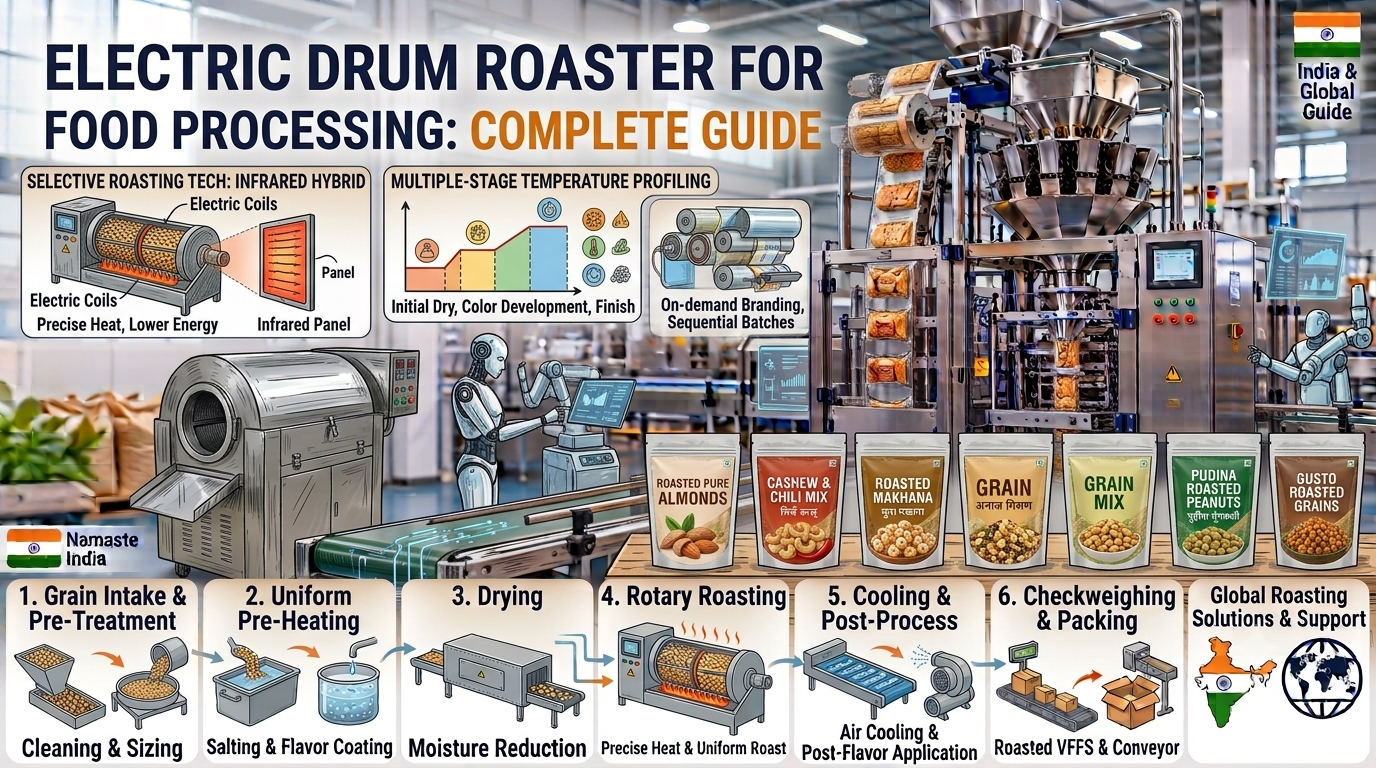
An electric drum roaster is an efficient food processing machine designed to roast a variety of food products using controlled electric heating and a rotating drum. It is commonly used for products such as peanuts, nuts, seeds, pulses, grains, and suitable snack ingredients.
For food manufacturers, consistent roasting is important for achieving the desired taste, texture, aroma, and appearance. An electric drum roaster helps simplify this process by providing controlled heating and continuous product movement.
What Is an Electric Drum Roaster?
An electric drum roaster is a roasting machine equipped with an electrically heated system and a rotating drum. The product is loaded into the drum and continuously rotated while heat is applied.
The rotating action helps expose the product more evenly to the heat, while temperature controls allow operators to adjust the roasting conditions according to the product requirements.
How Does an Electric Drum Roaster Work?
The roasting process generally follows these steps:
Product Loading
The selected raw material is loaded into the rotating drum according to the machine’s recommended capacity.
Electric Heating
Electric heating elements generate the required heat for the roasting process. The operating temperature can be adjusted according to the product.
Drum Rotation
As the drum rotates, the food product moves continuously inside the roasting chamber. This helps improve heat exposure and supports uniform roasting.
Temperature and Time Control
The operator can monitor and adjust temperature and roasting duration according to the desired product characteristics.
Product Discharge
Once roasting is complete, the finished product is discharged from the drum and can be transferred for cooling, seasoning, further processing, or packaging.
Applications of Electric Drum Roasters
Electric drum roasters can be used for various food processing applications, including:
- Peanuts and groundnuts
- Almonds and other nuts
- Seeds
- Pulses
- Chickpeas
- Grains
- Snack ingredients
- Namkeen ingredients
- Other suitable food products
The suitability of the machine depends on the product characteristics, moisture level, required roasting temperature, capacity, and processing requirements.
Benefits of Electric Drum Roasting
Uniform Roasting
The rotating drum continuously moves the product, helping provide more consistent exposure to heat.
Controlled Temperature
Electric heating allows the roasting temperature to be adjusted according to the product and desired roasting level.
Consistent Quality
Controlled processing can help manufacturers maintain more consistent colour, texture, aroma, and taste across batches.
Reduced Manual Work
The rotating and heating system reduces the need for continuous manual stirring and product handling.
Improved Production Efficiency
Electric drum roasters can process suitable products efficiently and can be incorporated into larger food production lines.
Versatile Usage
The machine can be used for different nuts, seeds, pulses, grains, and snack ingredients when configured appropriately.
Factors to Consider Before Buying an Electric Drum Roaster
Food manufacturers should consider the following factors before selecting a machine:
Product Type: Identify the exact food product that needs to be roasted.
Production Capacity: Select the machine according to the required batch size or hourly output.
Temperature Range: Make sure the machine can achieve and maintain the temperature required for your product.
Drum Capacity: Choose a drum size suitable for your production requirements.
Heating System: Check the electrical power requirement and heating performance.
Construction Quality: Food-contact components should be made from suitable food-grade materials.
Cleaning and Maintenance: Choose a machine that allows easy cleaning and routine maintenance.
After-Sales Service: Availability of spare parts, technical support, installation, and operator training should also be considered.
Electric Drum Roaster for Snack Production
Roasting is an important stage in the production of several snacks. Peanuts, pulses, seeds, and other ingredients may need to be roasted before seasoning or packaging.
An electric drum roaster can be integrated with cooling, seasoning, conveying, and packaging equipment to create a streamlined production process. This can help manufacturers maintain consistent processing while improving overall production efficiency.
Why Choose an Electric Drum Roaster?
For businesses moving from manual roasting to machinery-based production, an electric drum roaster can provide better control over temperature, roasting time, and product movement.
It can help reduce repetitive manual operations while providing a more standardized roasting process. The machine can be particularly useful for food manufacturers that need consistent roasting across regular production batches.
Conclusion
An electric drum roaster for food processing is a practical solution for controlled and consistent roasting of suitable nuts, seeds, pulses, grains, peanuts, and snack ingredients. Its combination of electric heating and rotating drum operation helps improve heat exposure and simplify the roasting process.
Before purchasing an electric drum roaster, manufacturers should evaluate product type, production capacity, temperature requirements, drum size, power consumption, construction quality, maintenance, and after-sales support. Selecting the right machine based on these requirements can help create a more efficient and reliable food processing operation.